← All posts
JavaScript65 min total · 16 parts
JavaScript Array and Object Methods Cheat Sheet
Contents — Part 15 of 16: A Worked Example Combining Several of These
- 1.Overview
- 2.Mutating vs. Non-Mutating: The Distinction That Matters Most
- 3.Transforming Arrays
- 4.Searching and Testing Arrays
- 5.Iterating Arrays
- 6.reduce() in Depth
- 7.Object Methods
- 8.Spread and Rest
- 9.Destructuring
- 10.Optional Chaining and Nullish Coalescing
- 11.Equality: == vs. ===, and Comparing Objects
- 12.Map and Set: Alternatives to Plain Objects
- 13.JSON.stringify and JSON.parse
- 14.Shallow Copy vs. Deep Copy
- 15.A Worked Example Combining Several of These
- 16.Common Mistakes Worth Remembering
Part 15 of 16 · ~1 min
A Worked Example Combining Several of These
const users = [
  { name: "Alice", age: 30, active: true },
  { name: "Bob", age: 17, active: false },
  { name: "Carol", age: 25, active: true },
];

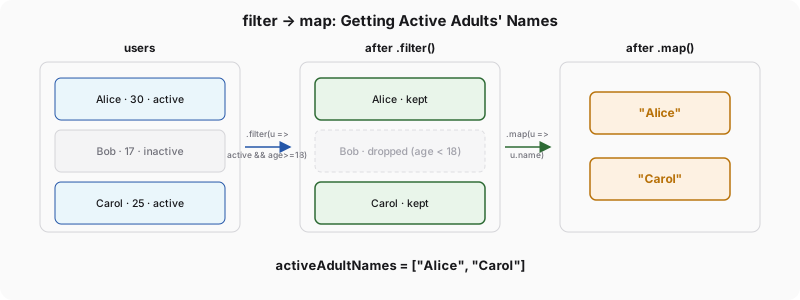
const activeAdultNames = users
  .filter(u => u.active && u.age >= 18)
  .map(u => u.name);
// ["Alice", "Carol"]

const byName = Object.fromEntries(users.map(u => [u.name, u]));
// { Alice: {...}, Bob: {...}, Carol: {...} } — quick lookup table by name

const averageAge = users.reduce((sum, u) => sum + u.age, 0) / users.length;
// 24 — reduce for a running total, then a plain division
This chain — filter, then map — is one of the most common patterns in real JavaScript code, and it reads almost exactly like the English description of what it does. Combining .reduce() with Object.fromEntries() for lookup tables, and chaining .filter().map() for transforming lists of records, covers a large share of the data-shaping code in a typical frontend or Node.js codebase.